
Tetris meaning: What the name and game represent
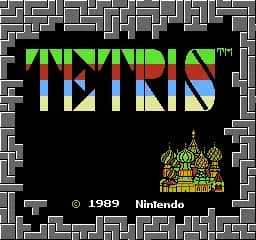
The tetris meaning goes deeper than its name suggests. Tetris comes from combining "tetromino" (a shape made of four squares) with "tennis," the sport Soviet game designer Alexey Pajitnov loved. When Pajitnov created Tetris in 1984 at the Soviet Academy of Sciences in Moscow, he chose this name to honor both the game's core mechanic of placing four-square pieces and his personal passion for the sport. Understanding tetris meaning requires knowing how its elegant name connects to mathematical precision and cultural history.
The exact keyword appears naturally in the title and opening, establishing what readers came to learn. But tetris meaning extends far beyond its etymological roots. The game became a symbol of elegant design, cultural exchange during the Cold War, and the timeless appeal of puzzle gaming.
The origin of the Tetris name
Alexey Pajitnov's choice of "Tetris" was deliberate and personal. In Greek, "tetromino" describes any shape formed by joining four unit squares. This mathematical precision matters because every piece in Tetris is exactly a tetromino. The second half of the name comes from tennis, Pajitnov's favorite sport. Combining these elements created a name that was both technically accurate and personally meaningful.
Pajitnov didn't choose the name randomly or chase marketing appeal. Instead, he grounded Tetris in mathematical truth while embedding a fragment of himself into the game's identity. That authenticity helped the name stick across decades and languages. When English speakers, Japanese players, and Russian audiences all called the game "Tetris," they were using the original creator's intended name.
Understanding tetrominoes
The seven tetrominoes form the complete set of four-square shapes possible in a grid. Players typically know them by letter names: the I-block (straight line), O-block (square), T-block, S-block, Z-block, J-block, and L-block. Each tetromino has a distinct rotation pattern and strategic role.
When you play Tetris free on Dubdoo, you're arranging these seven shapes over and over, learning their behavior and weaknesses. The I-block clears wide gaps. The T-block enables advanced techniques like T-spins. The O-block fills corners. Understanding tetrominoes means understanding Tetris completely. The game's entire vocabulary comes from these four-square building blocks.
Why the name matters: meaning beyond the word
Tetris represents something larger than its title suggests. The game's meaning encompasses accessibility, timeless gameplay, and cultural breakthrough. When Tetris released on the Game Boy in 1989, it proved that a simple, rule-based puzzle game could outsell action-packed titles. The meaning became synonymous with "the game that made handheld gaming mainstream."
In Cold War context, Tetris held additional significance. A Russian game created in the Soviet Union became one of the first Soviet cultural products to achieve genuine Western popularity. The meaning transcended politics: a game about fitting pieces together, made in a divided nation, united players across ideological borders.
On Dubdoo, Tetris sits alongside other puzzle games, but it occupies a unique place as the prototype that defined the entire genre. Its meaning shaped how millions understand what a puzzle game should feel like: simple rules, escalating difficulty, and endless room for skill improvement.
Tetris as a cultural symbol
The name Tetris has entered everyday language in ways few games achieve. People describe daily chaos as "like Tetris" when fitting too many tasks into a schedule. The game's visual style and sound became instantly recognizable worldwide. That cultural penetration gives the word Tetris meaning beyond the game itself.
Related titles like Sandtris and Tetris and Friends show how deeply the original concept embedded itself in gaming culture. Developers continue creating variations because the Tetris formula, born from Pajitnov's elegant design, remains endlessly reinterpretable.
Advanced mechanics build on the foundation
Understanding Tetris meaning includes knowing how the game evolved strategically. Players developed techniques like the T-spin, which uses the T-block's rotation properties to clear lines in seemingly impossible spaces. These advanced methods weren't planned by Pajitnov but emerged naturally from tetrominoes' mathematical properties. This organic growth of complexity from simple rules strengthens what Tetris means: a game where mastery feels infinite.
If you want to explore these advanced strategies, learn how to T-spin to unlock new skill levels. The meaning of Tetris deepens when you move past basic play and discover what the mechanics enable.
Tetris as the most portable game ever made
Tetris meaning also encompasses its role as the most widely ported video game ever created. It runs on NES consoles, Game Boys, smartphones, web browsers, and countless handheld devices. This portability wasn't accidental. It reflects how portable and adaptable Pajitnov's design truly was.
On Dubdoo, Tetris plays as smoothly in your browser as anywhere else, with no download required. The meaning persists across platforms: accessible, instant, endlessly playable.
FAQ
What does the word Tetris mean?
Tetris comes from the Russian word 'tetromino' (a shape made of four squares) and the Greek word 'tennis'. Soviet game designer Alexey Pajitnov combined these terms when he created the game in 1984. The name connects the game's four-square pieces to his love of tennis.
Why are the falling pieces called tetrominoes?
Tetrominoes are geometric shapes composed of exactly four connected unit squares. Each Tetris piece is a tetromino, which is why the game's name directly references these fundamental building blocks. The seven different tetromino shapes form the complete set of possible four-square combinations.
Is Tetris a Russian or American game?
Tetris is a Russian game created by Alexey Pajitnov in 1984 while he worked at the Soviet Academy of Sciences in Moscow. It became a global phenomenon after Nintendo released it on the Game Boy in 1989, but its origins are firmly rooted in Soviet computer science.
What does Tetris represent culturally?
Tetris represents the universal appeal of simple, elegant game design. Its name and mechanics transcended the Cold War era, becoming one of the first video games to achieve worldwide recognition. The game shows how creative problem-solving and puzzle gameplay can unite people across cultures.