
Solitaire Tips: Master the Classic Card Game
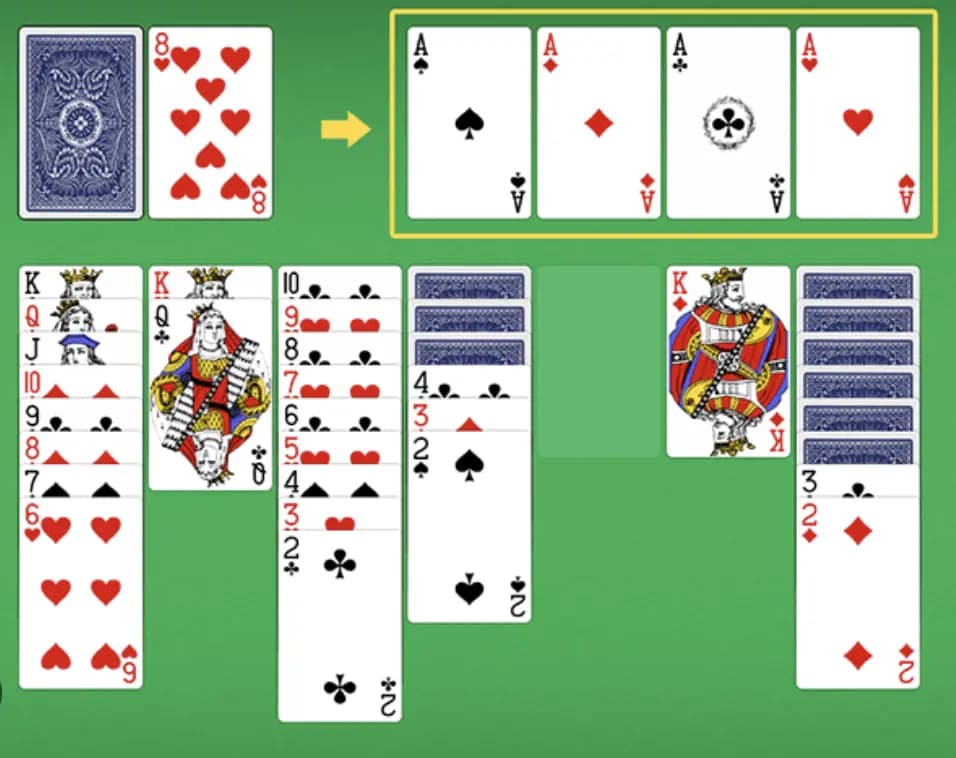
Solitaire is a game of patience and planning, but winning consistently requires more than luck. With the right solitaire tips, you can dramatically improve your win rate and master this timeless card game. The key is understanding which moves matter most and thinking several steps ahead.
Expose hidden cards first
The most powerful strategy in solitaire involves revealing cards in the tableau. Every hidden card represents a potential move you cannot make, so your primary goal should be uncovering them as quickly as possible.
When you have a choice between two moves, ask yourself: which one reveals a new card? If moving a Five of Diamonds exposes a card underneath, but moving a Ten of Hearts does not, choose the Five. This simple rule alone transforms your game because hidden cards unlock sequences you cannot anticipate.
Work methodically through columns from left to right, prioritizing the ones with the most face-down cards. Once a column clears, you have maximum flexibility to rearrange the tableau.
Create and use empty columns strategically
An empty column is one of your most valuable resources. It gives you a temporary holding space for any card, which opens up new moves in the tableau and helps you access cards buried deeper in other columns.
Do not fill an empty column immediately with the first card that fits. Instead, plan ahead. If you have a King of Spades ready to fill a gap but moving it would block a sequence you need to complete, wait. Use the empty column to support a move that reveals more hidden cards or advances your foundation piles.
Sometimes holding an empty column in reserve works better than using it right away. If you are close to clearing a column or exposing a key card, preserve the empty space for that moment.
Build alternating color sequences thoughtfully
In the tableau, you stack cards in descending order with alternating colors (red on black, black on red). This is how solitaire works, but the order you build these sequences matters.
Before you automatically place a card in a sequence, check if that card blocks a better play. For example, if placing a Six of Hearts on a Seven of Clubs would trap an Ace of Diamonds underneath, reconsider. That Ace might help your foundation.
Sequences that span multiple cards are powerful because they free up space, but only if the cards you are moving are ones you truly want to move. Avoid building sequences just to clean up the board; build them strategically to uncover the cards you need.
Plan your foundation moves carefully
The foundation represents your end goal (four complete piles, one per suit, from Ace to King), but rushing cards there can trap you. A card placed on the foundation stays there for good, so think before committing.
Early in the game, focus on the tableau and leave the foundation alone unless you have an Ace available or a clear reason to move a card. Aces always go to the foundation, but beyond that, wait until moving a card there genuinely opens up a better play.
Late in the game, when the tableau has mostly cleared and you have few moves left, the foundation becomes the natural place to deposit cards. By then, you will have a much better sense of which cards are still hidden and which ones are safe to commit.
Look ahead to anticipate blocked sequences
Solitaire rewards players who think multiple moves into the future. When you make a move, visualize the board two or three steps later.
If you place a card in a certain position, will it block a sequence you will need to build? Will it trap a key card underneath? These questions should guide your play. The best solitaire players are not reacting to the board; they are shaping it.
One practical habit: before you move a card, pause and scan the entire tableau. Is there a buried card that move would unlock? Is there a hidden card that move would block? This one second of planning prevents costly mistakes.
Manage the stock and waste piles wisely
As you play, you cycle through the stock pile (the face-down cards on the side), which reveals cards to the waste pile. Some solitaire games let you cycle through the stock multiple times; others limit you to one or two passes.
Focus on making tableau moves first, since they are permanent and strategic. Only turn to the stock when you have exhausted the moves available in the tableau. This keeps you cycling through the stock less frequently and gives you more options when you do reveal a card.
If you can play free solitaire on Dubdoo, check the game rules for stock limits. Some variants give you unlimited passes; others penalize you for cycling too many times. Adjust your patience accordingly.
Stay calm and recognize losing positions early
Some hands are unwinnable from the start, and that remains okay. Recognize when you are stuck: no hidden cards are exposed, no moves are available, and no stock cards help. These losses teach you as much as wins.
Do not force moves just to keep playing. If you are truly blocked, starting a fresh game makes more sense than wasting time. Each new hand offers an opportunity to apply your tips and test your strategy.
Solitaire operates within the bounds of chance. You cannot control which cards appear, but you control how you arrange them. Master these strategies, and you will find yourself winning far more often.
FAQ
What's the best strategy for winning solitaire?
Prioritize revealing hidden cards in the tableau. Move cards strategically to create empty columns, which provide temporary slots for any card. Focus on long-term planning rather than making the first available move. The game rewards patience and foresight.
Should I move cards to the foundation immediately?
Not always. While the foundation represents the goal, sometimes holding a card in the tableau gives you more flexibility to maneuver and reveal hidden cards. Move to the foundation when it doesn't block better plays in the tableau.
How do I create empty columns in solitaire?
Empty a tableau column by moving all its cards elsewhere (to other columns, the foundation, or temporary hold). An empty column matters because you can place any card or sequence there, opening up entirely new moves and pathways.