
Run 2 miles a day
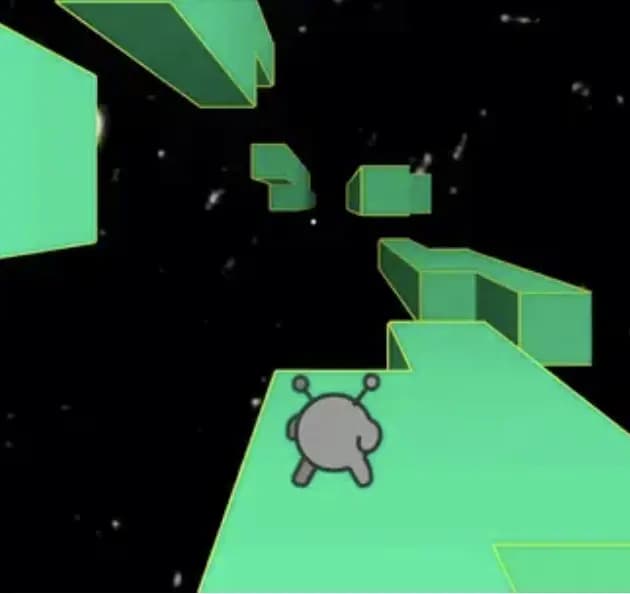
If you're thinking about running 2 miles a day in real life, you'll need endurance and consistency. Run 2 builds those same qualities through gameplay. The more you play each day, the better your rhythm becomes, and the farther you push through its gauntlet of platforms, walls, and hazards. This browser platformer rewards daily habits: solid skill growth, measured progress, and genuine improvement within weeks.
Building a daily habit with Run 2
The structure of Run 2 makes it ideal for daily sessions. Each level is self-contained, so you can run one or ten in a sitting without commitments spilling over. You jump through obstacles, collect coins and power-ups, and reach the exit, then start fresh on the next stage. This loop reinforces muscle memory fast. After a week of daily play, your jump timing tightens noticeably. After two weeks, you'll clear levels on your first or second attempt that seemed impossible on day one.
Most runners who stick with Run 2 daily find a pattern: a quick 5 to 10 minute warm-up session first thing, then deeper, longer runs in the evening. The game doesn't punish you for breaks, so you can play sporadically throughout the day without losing your footing.
Mastering the wall-jump mechanic
The defining feature that separates casual players from consistent runners is wall-jump precision. When you jump on a wall in Run 2, the entire level rotates around you. This isn't decorative; it's tactical. A wall that was vertical becomes a floor. A ceiling becomes a ramp. Learning to chain wall-jumps into sequences opens pathways that seem blocked on first glance.
Daily practice teaches your brain to read these rotations instantly. Early on, you'll pause mid-level to figure out your next move. After weeks of daily runs, you'll navigate complex wall sequences without thinking. Your hands just know the timing. This is the skill that separates runs lasting 2 minutes from runs lasting 20. Play Run 2 free on Dubdoo and return each day to refine this core mechanic. It's the reason people keep coming back.
Power-ups and coins as daily rewards
Every level in Run 2 sprinkles coins and power-ups throughout. Speed boosts let you sprint through tight sections. Shields absorb one hit. Regular coins are cosmetic, but collecting them gives your daily runs a secondary goal beyond just reaching the exit. This layering matters psychologically. You're not grinding the same level ten times; you're running for coins, then for speed, then for a shield, then for pure time.
Daily runners often dedicate sessions to one specific goal: "Today I collect every coin in levels 1 through 5." Next day: "Beat those five levels in under five minutes." Week after: "Wall-jump through the hard route in level 8." Rotating your daily objectives keeps Run 2 fresh even after hundreds of plays.
How consistency affects your performance
The jump from casual player to daily runner is measurable. In your first few sessions, you'll die to obstacles you didn't see coming. By day five, you predict them. By day ten, you react before they're even on screen. Your eyes learn the level layouts. Your fingers learn the rhythm. Your timing improves not because Run 2 got easier, but because your nervous system adapted to its specific feel.
This applies to real running too. Runners who log miles daily build endurance and form through repetition, not intensity. Run 2 operates the same way. The game doesn't require heroic effort; it requires showing up. Five minutes of consistent play outweighs one hour of sporadic play every time.
Exploring the arcade game ecosystem
Run 2 exists in a rich ecosystem of arcade platformers on Dubdoo. If you're building a daily gaming routine, you might pair it with other runners and platformers. Geometry Dash offers rhythmic jumping to music, which complements Run 2's freeform pacing. Slope teaches you to manage momentum and collision avoidance at speed. Level Devil plays with expectations through devious level design, sharpening your reading skills. Rotating between these games during your daily sessions keeps you sharp across different playstyles.
The Arcade category on Dubdoo hosts dozens of titles built around this same principle: short rounds, instant feedback, and skill-based progression. Run 2 is a natural anchor for a daily arcade routine.
Making daily runs a habit
The easiest way to commit to daily Run 2 is to tie it to an existing routine. Play after breakfast. Play during a study break. Play for five minutes while your coffee cools. The key is consistency, not duration. Two minutes every single day builds more skill than four hours once a week. Your brain consolidates micro-habits faster than it forgets long breaks.
Set a personal goal. It doesn't have to be numeric. "Beat one new level each week" or "collect 50 coins" or "improve my wall-jump speed" gives your daily sessions direction. Without a target, even structured play can feel aimless.
Run 2 keeps you progressing because it has dozens of levels with increasing difficulty. You'll never hit a true ceiling where there's nothing left to do. There's always a faster time, a trickier route, or a level you haven't conquered yet. This open-ended growth is what makes it stick as a daily habit.
FAQ
How do I rotate levels in Run 2?
Jump on walls to rotate the level around you. This mechanic is essential for reaching new areas and bypassing obstacles that block your path forward.
What's the best strategy for collecting coins in Run 2?
Plan your jumps to land near coin clusters, but prioritize reaching the level exit first. Once you've memorized a level's layout, return for coins you missed on your first run.
Can I play Run 2 without downloading anything?
Yes. Run 2 plays free in your browser on Dubdoo with no download required. Load the game and start running immediately.
What power-ups should I prioritize in Run 2?
Speed boosts help you cover ground faster and clear sections with tight timing windows. Shield power-ups protect you from one obstacle hit, buying you time to recover your footing.