
Fireboy and Watergirl Elements: Game Mechanics Explained
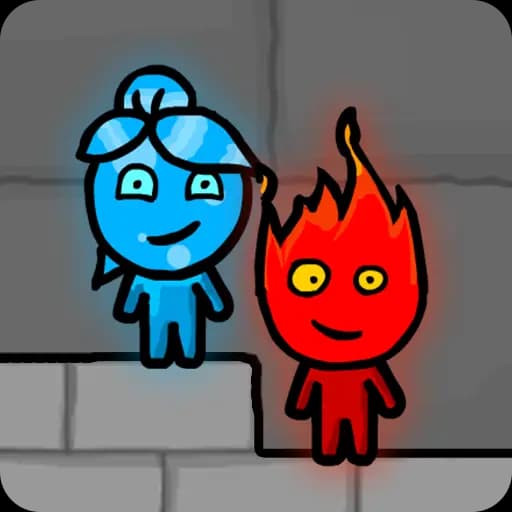
Fireboy and Watergirl's core design revolves around two characters with opposing elemental properties, and understanding how the fire and water elements function is the key to progressing through its maze-based puzzles. Fireboy can walk through fire without harm but dies instantly if he touches water, while Watergirl thrives in water zones but cannot touch fire. This mechanic forces constant cooperation and clever use of each character's unique abilities to advance.
How the element system shapes level design
Each level in Fireboy and Watergirl is divided into zones distinguished by their elemental properties. Fire zones, typically colored in red or orange hues, are lethal to Watergirl but present no danger to Fireboy. Water zones, shown in blue, have the opposite effect. Neutral gray platforms and corridors allow both characters to travel safely. This three-zone structure means no single character can complete a level alone; the puzzle design inherently demands teamwork.
The level layout exploits this limitation ruthlessly. A simple exit door might be accessible only through a water zone, forcing Fireboy to stay behind while Watergirl advances. Alternatively, a critical switch might sit in a fire zone, requiring Fireboy to activate it while Watergirl waits in safety. Some puzzles layer these demands, requiring both characters to occupy specific positions simultaneously to unlock the path forward.
Character-specific movement and abilities
Both Fireboy and Watergirl move and jump identically in terms of physics, but their survivability differs entirely based on environment. When controlling Fireboy, you move left and right with arrow keys or WASD, jump to clear platforms, and must actively avoid any water tile. A single pixel of contact with water ends the run for Fireboy. Watergirl operates under the same control scheme but faces the inverse constraint: fire zones are impassable.
The jump height, run speed, and collision detection are uniform between characters. This balance means neither character has a gameplay advantage outside their elemental safety zones. Puzzle solutions often hinge on recognizing which character must take which path, then executing the navigation cleanly. Poor timing or a missed jump can waste minutes of progress if it forces one character into an unsafe zone.
Switches, treasures, and cooperative mechanics
Level completion requires reaching the exit, but many levels contain treasures scattered through fire and water zones. Collecting all treasures is optional but rewarded with bonus points or achievements. A treasure might sit in a fire zone only Fireboy can reach, or vice versa. This design encourages both players to explore actively rather than rushing straight to the exit.
Colored switches and pressure plates add another layer of cooperation. A blue switch might open a gate for Watergirl, while a red switch opens a path for Fireboy. Some switches must be held down while the other character passes through a door, creating tense moments where one player must stay in position while the other navigates a narrow corridor. These synchronized actions often distinguish easy levels from harder ones.
Navigating mixed-element challenges
Advanced levels introduce corridors or platforms that combine both elements in creative ways. A narrow walkway might have fire on one side and water on the other, forcing each character to hug opposite edges. Some puzzles create "safe spots" in the middle where neither element poses a threat, turning spatial awareness into the real puzzle rather than raw platforming skill.
Lava flows and ice patches add visual texture to element zones. A lava section represents fire conceptually and is actively animated and dangerous. Water zones likewise feature flowing currents and splashing effects. This visual clarity helps players instantly recognize which character can proceed safely without needing a text label or hint system.
How element mechanics scale difficulty
Early levels separate fire and water zones completely, giving players time to understand the system. Later levels interleave them closely, forcing rapid character switching and careful step-by-step navigation. Some of the hardest levels place hazardous zones in tight spirals or mazes where a single mistake sends a character tumbling into the wrong element zone.
The element system also creates natural checkpoints. When Fireboy or Watergirl dies, the level resets, but both characters restart from the beginning. No progress is saved mid-level. This reset mechanic is punishing but fair; it pushes players to memorize routes and build reflexes rather than lucking into solutions. Understanding which character must go first often determines whether a puzzle is solvable without excessive retries.
Multiplayer coordination in the element zones
Fireboy and Watergirl shines in multiplayer mode, where one player controls Fireboy and another controls Watergirl. The element mechanic forces genuine cooperation rather than parallel play. Player 1 cannot simply replicate Player 2's route; they must navigate fundamentally different environments. Communication becomes vital: calling out hazards, coordinating timing on switches, and warning about dead ends prevent frustration.
The game remains playable solo, with one person switching control between characters. Solo play is slower and demands more mental load, but it's entirely viable. The puzzle logic stays identical whether one or two humans are playing.
Element zones across different Fireboy and Watergirl games
The core element mechanic carries forward across the series. Fireboy and Watergirl 2 and Fireboy and Watergirl 5 expand on this foundation, adding new element types, moving platforms, and more elaborate puzzle structures. The underlying principle remains: each character can safely traverse one element zone while the other cannot.
If you enjoy the element-based puzzle design here, related adventure games like The Legend of Zelda Ocarina of Time offer similar cooperative and inventory-based problem-solving, though with different mechanics. For more browser-based puzzlers on Dubdoo, explore our best browser games collection.
FAQ
Why can't Fireboy touch water in Fireboy and Watergirl?
Fireboy's character is made of fire, so water extinguishes him instantly, causing him to respawn. Conversely, Watergirl cannot touch fire. This core mechanic forces players to use both characters strategically to solve puzzles and reach the exit.
What are the different element zones in Fireboy and Watergirl?
Each level contains fire zones, water zones, and neutral zones. Fire zones harm Watergirl but are safe for Fireboy. Water zones harm Fireboy but are safe for Watergirl. Neutral zones are safe for both characters and often contain switches, platforms, or treasures.
How do Fireboy and Watergirl cooperate to solve puzzles?
Puzzles require both characters to work together. One character may need to hold a switch while the other passes through a door, or they must navigate different paths simultaneously to reach colored buttons and levers that open the exit.
Can you play Fireboy and Watergirl solo?
Yes, you can control both characters yourself by switching between them during a level. Solo play is slower and requires more mental management, but all puzzles remain solvable. Multiplayer mode allows two players to control one character each, which often feels more natural and enjoyable.