
Dashmetry: Master the Geometry Dash Speedrun
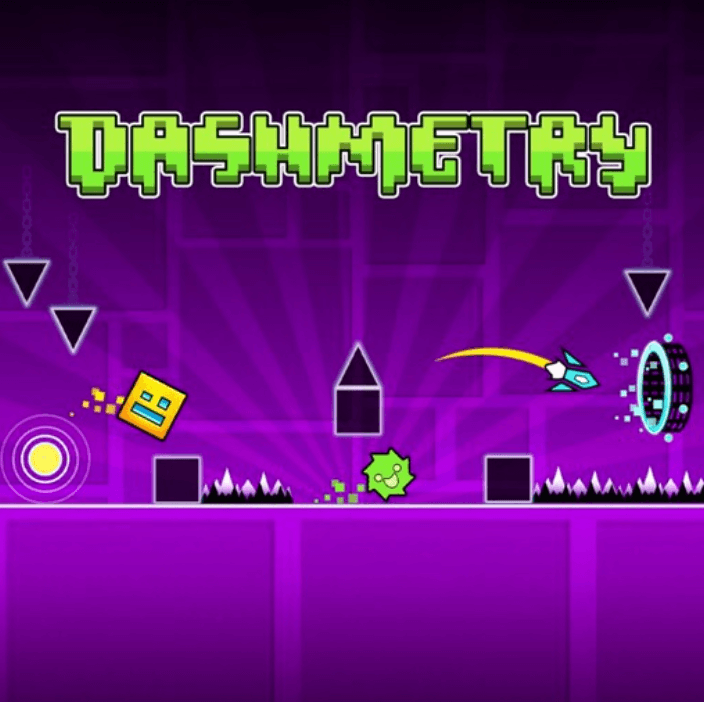
Dashmetry is a fast rhythm-platformer that blends the obstacle-dodging spirit of Geometry Dash with rapid-fire dashing and jumping. You'll time button presses to slip through spikes, leap over gaps, and weave around moving hazards as the speed climbs relentlessly. The catch is that every level teaches you a pattern, then breaks it by accelerating or throwing new hazards at you without warning. Mastering Dashmetry means learning to read the rhythm of danger and react with split-second precision.
Why Dashmetry stands out in platformer design
Most platformers give you time to think. Dashmetry doesn't. The game locks you into a rhythm: you learn the safe path, nail the timing, then the level accelerates and forces you to commit without hesitation. This design keeps the difficulty tight but fair. You're never fighting broken controls or luck; you're fighting your own reflexes and memory.
The game uses moving platforms and hazards that shift position mid-level, so replaying the same stage doesn't mean running the identical gauntlet. You adapt or fail. That randomness hooks you because every run feels different, even if the core layout is the same. On Dubdoo, you can play Dashmetry free without a download, so you can jump into sessions whenever the urge hits and build skill over weeks instead of days.
Jump versus dash: reading the moment
Dashmetry's two main moves are your jump and your dash, and knowing which one to use separates fast clears from run-ending crashes. A jump arcs you upward and forward, useful for clearing wider gaps and reaching higher platforms. A dash fires you sideways or diagonally in a burst, perfect for threading thin gaps between spikes or sliding under low hazards. The game teaches you early which hazard calls for which move, but later levels stack them so tightly that you must choose both correctly and at the right frame.
Early levels let you pause and breathe. By the midgame, the speed locks you into a constant rhythm: no pause, no mercy. You'll recognize a spike pattern and know instinctively whether to jump or dash, but hesitation kills you. That muscle memory is what Dashmetry chases. Spend 10 runs on one level and your hands will know the moves before your brain finishes seeing the layout.
Learning level patterns and the speed ramp
Every Dashmetry level starts at a gentle pace and teaches a new mechanic. The first few attempts show you where the safe path is. Then the speed increases in stages, and new obstacles appear. A segment you jumped through cleanly at 1x speed might become impossible at 1.5x if a moving spike enters the picture. This design forces you to practice and adapt rather than memorize one perfect run.
The key is to fail fast and often early on. Don't try to win your first attempt; spend your first five runs just learning what happens and where the major hazards sit. Watch how moving platforms behave. Notice which gaps require a short jump versus a long one. Once you've crashed a dozen times and seen the level's rhythm, your third or fourth run will feel drastically smoother. That's when the speed ramp stops feeling unfair and starts feeling like a natural challenge.
Timing consistency and rhythm cues
Dashmetry ties hazard placement and character movement to an underlying beat. You'll notice the music or sound effects shift as the level accelerates. Some players turn up the volume and let the audio drive their timing; others focus on the visual flicker of moving hazards. Either way, the game rewards rhythm-based thinking over frantic button mashing.
If you find yourself crashing repeatedly at the same spot, slow down your breathing, focus on one upcoming hazard at a time, and stay present. Rush ahead mentally and you'll panic. Watch the next spike or gap, execute the move, then react to what comes next. This rhythm-based patience is what separates speedrunners from frustrated clickers.
Related games to sharpen your platforming edge
If Dashmetry hooks you, the browser has other rhythm and platformer titles that build the same reflex skills. Level Devil strips platforming down to troll-level difficulty and absurd physics, teaching you to think sideways about movement. Geometry Dash is the obvious sibling: it's more user-friendly than Dashmetry but shares the obstacle-dodging and timing foundation. For something faster-paced, Slope locks you into a rolling ball racing downhill, where precision steering replaces jumping but the speed ramp remains brutal.
The Platformer category on Dubdoo has dozens of other titles in this space. Celeste Pico Unblocked covers the PICO-8 remake of the indie classic, another game that teaches you to value pattern recognition over raw speed. Each game strengthens a different angle of platformer intuition.
What to expect on your first playthrough
Dashmetry will crush you. That's the point. The game is explicitly tagged as difficult, and it doesn't apologize for it. Your first 20 to 30 runs will end in the first or second level. By run 50, you'll clear the third level. By run 100, you'll see most of the level set but struggle with the later stages. That's normal and expected. The game is designed to reward persistence and practice, not natural talent.
The difficulty ramp is steep but consistent. Each new level introduces a new mechanic: moving platforms, narrower gaps, reversed controls, or hazards that trigger on timing rather than position. The game teaches you what's new before throwing you at it at speed, so you're not figuring out the controls in the heat of the moment. You're figuring out how to react fast enough once you already know what should happen.
Why Dashmetry works as a skill-building game
The best platformers test reflexes and teach you how to learn. Dashmetry forces you to study a level, fail, adjust, and try again until muscle memory kicks in. You can't button-mash your way through. You can't luck out with a random sequence of correct inputs. Every clear is a personal win because you earned it through repetition and focus.
On Dubdoo, the game runs smoothly in your browser without downloading or installing anything. You can hop in for five-minute sessions or commit to a two-hour grind. The no-barrier-to-entry approach means you can test whether the Dashmetry challenge excites or frustrates you before sinking real time into it.
FAQ
What's the difference between Dashmetry and Geometry Dash?
Dashmetry is a rhythm-platformer inspired by Geometry Dash but focuses on fast-paced dash mechanics and moving hazards. While Geometry Dash emphasizes cube jumping through static obstacle patterns, Dashmetry ramps up speed dynamically and requires tighter timing on dashes and jumps combined.
What controls do I need to play Dashmetry?
Dashmetry uses keyboard controls (Space, Up arrow, or Arrow keys) to jump and dash, or tap and click on touchscreen devices. The controls adjust per level mode, so check the tutorial at the start of each new level type to confirm your input method.
How do I improve my timing in Dashmetry?
Practice the same levels repeatedly to memorize hazard patterns and movement timing. Watch your character's animations and listen to the rhythm cues as the speed increases. Start by learning when to dash versus jump, then refine the exact moment to press each button.
Is Dashmetry harder than other platformers?
Yes. Dashmetry is tagged as difficult and designed for players who want a serious challenge. If you're coming from casual platformers, expect steep difficulty jumps, but the level progression teaches new mechanics gradually before ramping the speed hard.