
Bouncy Basketball 2: Tips for Mastering the Bounce Mechanics
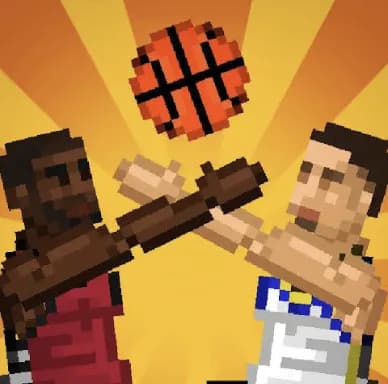
Bouncy Basketball 2 takes the arcade basketball concept and layers in timing puzzles that demand precision over reflexes. With just one button and exaggerated bouncy movement, every jump is a calculation: predict the ball's path, bounce your player in sync with gravity and momentum, grab the ball before your opponent does, and dunk it to score before time runs out.
Understanding the bounce physics
The game's core mechanic revolves around how your player bounces across the court. Each jump sends you in a direction, and gravity pulls you down with a slight forward momentum. Understanding bounce decay is essential: your first bounce carries the most energy, your second carries less, and by the third or fourth jump, you're nearly stationary unless you jump again. This creates a rhythm to movement that separates casual play from skilled play.
When you press your jump button, your character launches upward and forward simultaneously. The angle of your bounce is partly fixed and partly dependent on where you were standing when you jumped. If you jump while moving toward the baseline, your bounce trajectory shifts. If you jump while stationary, you get a more predictable arc. Mastering this subtle difference lets you control where you land even without direct steering.
Timing the grab
The ball doesn't stay in one place. It moves between players, bounces off the court, and sometimes hangs in the air after a shot attempt. To grab the ball, you need to have your player's collision box overlap with it at exactly the right moment. This sounds simple until you realize both you and your opponent are bouncing unpredictably, and the ball itself is moving.
The trick is reading the ball's trajectory before it happens. If your opponent just shot toward your basket, the ball will arc downward in a predictable path. Instead of chasing the ball directly, jump slightly ahead of where it will be. Land in its path, grab it, and immediately pivot your next jump toward the opponent's basket.
Against the AI, you'll notice it telegraphs its moves. It tends to jump in bursts and doesn't always grab the ball on the first try. Watch for these patterns and use the AI's delays to your advantage. Jump when it jumps and beat it to the ball, or hang back and intercept when the AI misses its grab.
Dunking strategy
Once you have the ball, dunking is your only scoring method. Unlike some basketball games, there's no special dunk button or power meter. Simply bounce over the opponent's basket with the ball in your possession, and the dunk happens automatically. This means positioning is everything.
The opponent's basket sits at one end of the court, and you need to reach it with the ball before time runs out. Plan your bounce route: calculate how many jumps you need, whether you're moving away from the basket or toward it, and if the opponent can intercept you. Sometimes the fastest dunk isn't a straight line. If the opponent is directly between you and the basket, bounce sideways, circle around, and approach from the side.
In two-player mode against a friend, defensive positioning becomes critical. If your opponent has the ball, don't chase them in a straight line. Predict where they're going and cut them off. Jump in front of their path so they collide with you and lose the ball.
Mastering court positioning
The court has implicit zones: the center court where both players compete for loose balls, your baseline where you defend, and the opponent's baseline where you score. Understanding how long a bounce chain takes to cross each zone helps you plan. A single powerful jump might carry you halfway across the court, while three smaller jumps give you finer control but consume more time.
Corners are tricky. If you bounce into a corner, you might lose momentum and get stuck. The sidelines can work to your advantage if you use them strategically. Bouncing parallel to the sideline and then cutting hard toward the basket is faster than bouncing straight across the court.
Playing against AI
The AI opponent has set behaviors. It has faster reaction times at higher difficulties, but it doesn't adapt mid-game. It relies on jumping toward the ball whenever it appears and doesn't read your feints. Use this predictability by making unexpected bounce choices. If the AI expects you to take the shortest path to the basket, take a longer one. The AI will chase you, and you'll waste its time.
The AI also struggles with bounces near the baseline. If you grab the ball near your own basket and the AI is far away, you can often score before it recovers. Conversely, the AI often scores easily when you leave your baseline undefended for too long.
Two-player tips
Playing against a friend is where Bouncy Basketball shines. Communication and reading your opponent matter. After a few rounds, you'll learn whether your friend always chases the ball or plays more defensively. Adjust your strategy accordingly.
One advanced tactic is the fake bounce. Jump in one direction, realize your friend is there, and reset your positioning before jumping again. Since each bounce costs time but gains nothing if you don't grab the ball, commit to your bounces. Hesitation gives your opponent the advantage.
Practice and progression
Bouncy Basketball rewards repetition. The more you play, the more your muscle memory improves. You'll develop a feel for how long three bounces takes, how far a jump carries you, and what angles work best from different court positions. Start by playing against the AI on easy difficulty, then increase the challenge.
Set personal goals: can you score a dunk in under five jumps? Can you win by more than 10 points? Can you prevent the AI from scoring three times in a row? These challenges push you to refine your bounce control and court awareness.
If you want to explore other arcade sports games while you're here, Basket Random offers a similar chaotic multiplayer experience, and Retro Bowl brings arcade physics to football. Both are free to play on Dubdoo like Bouncy Basketball, and all three teach you to master momentum-based movement.
FAQ
What are the controls in Bouncy Basketball?
Player 1 uses W to jump and shoot, while Player 2 uses the Up Arrow key. Time your jumps to bounce toward the ball, grab it, and dunk it in your opponent's basket.
How does the bouncy physics system work?
Your player bounces around the court with exaggerated physics. The key is timing your jumps so your bounce trajectory carries you toward the ball and toward the opponent's basket. Each bounce loses momentum, so plan your path carefully.
Can you play Bouncy Basketball solo or only with a friend?
You can play against AI opponents for single-player practice or challenge a friend in two-player mode. Both offer endless arcade basketball fun without any download needed.
What's the best strategy for winning in Bouncy Basketball?
Focus on predicting ball movement and timing your bounces to intercept it. Learn how your momentum carries after each bounce, and practice controlling your direction mid-air. Fast reactions and understanding the court layout give you an edge against both AI and human opponents.