
2048 Tiles Generator: Master the Game's Core Mechanic
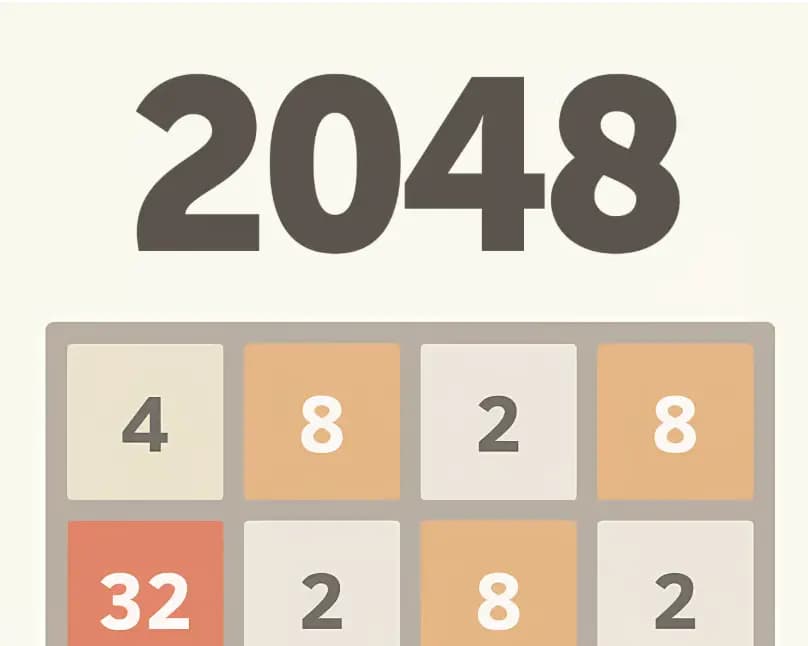
In 2048, the tiles generator is the invisible force that shapes every round. After you make each move, the game spawns a new tile (either a 2 or a 4) in a random empty square. Understanding how this mechanic works is the difference between reaching 2048 and hitting a dead end with a full board.
The generator places tiles at random according to specific rules that directly affect your strategy. Most new tiles are 2s, with 4s appearing roughly one in every ten turns. This distribution keeps early game progression manageable but ramps up difficulty as you build toward higher numbers. The generator only creates a tile after a successful merge or movement, so blocked moves don't waste empty spaces. This timing shapes how the game manages board saturation.
How the generator places new tiles
Every empty cell on the grid is a potential spawn point for the next tile. The 2048 tiles generator chooses randomly from available spaces with equal probability for each one. This randomness is what makes 2048 feel unpredictable, but it also prevents the game from being solvable in one fixed way.
A new tile appears only after your move creates or merges existing tiles. If you move in a direction and nothing shifts, no new tile generates. This means you can waste empty board space if you're not careful. Pressing up when all tiles are already at the top of the grid keeps that space available, but you've lost a turn without gaining anything.
Why 2s appear more often than 4s
The generator weights its random selection heavily toward 2s. In most implementations, about 90% of new tiles are 2s and 10% are 4s. This isn't random chance; it's built into the game's difficulty curve. A board flooded with 4s early would let you merge to high values too quickly, ending the game before it became challenging. By making 2s the default, the generator forces you to build your combinations gradually.
When a 4 does spawn, it's a win. You've just skipped combining two 2s, effectively gaining one move toward your goal. The rarity of 4s makes finding them satisfying and changes how you think about board positioning.
Strategic implications of random placement
Since you can't control where tiles appear, successful 2048 play means controlling where they can't hurt you. The optimal strategy involves dedicating one corner of the board as a "stacking zone" for your highest value tiles. Keep that corner sealed off while you work the rest of the board. This way, even if new tiles spawn nearby, they're separated from your main value reservoir.
Maintaining multiple empty spaces gives the generator flexibility, which paradoxically helps you. A board with one empty space is a board on the verge of losing. A board with five or six empty spaces absorbs new tiles easily, buying you time to plan merges. The generator respects open space; it doesn't accelerate spawning just because you're doing well.
Reading the generator's patterns
While placement is random, the sequence follows a rhythm. Over a full game, you'll see a steady stream of 2s with occasional 4s. This predictable frequency lets you set expectations. If you're twenty moves in and haven't seen a 4, don't expect one soon; plan around building your numbers with 2s alone. If you just got a 4, the next one might be fifty moves away.
Play 2048 free on Dubdoo and you'll start noticing how the generator shapes momentum. Early on, tiles spawn into empty space without pressure. Mid-game, empty cells become precious, and the generator's randomness feels more threatening. Late-game, when you're chasing 2048, a single badly placed tile can end your run.
Preparing for worst-case spawns
The generator will occasionally place a new 2 exactly where you don't want it. That's the game's design. Smart players don't assume perfect luck. Instead, they leave multiple options open. If your plan requires a specific empty cell, you've already lost. Keep two or three possible merge paths available so the generator's randomness doesn't trap you.
Keeping high-value tiles in one corner and leaving the opposite corner open is a common defensive play. When the generator places a 2 in that open zone, you can merge it upward or slide it toward your stack without disruption. You're working with randomness rather than against it.
Using the hint button to understand placement
If you're stuck, use the hint button mentioned in 2048's how-to-play guide to explore your options. While the hint doesn't predict where the next tile will spawn, it shows you which moves keep the board alive longest. This indirectly helps you manage the generator's output, since moves that leave the most empty space absorb new tiles better.
The generator in 2048 transforms a simple merge mechanic into a puzzle about forward planning. You're combining tiles while making space for the tiles the generator will inevitably create. Understanding this relationship turns random placements into something you can prepare for.
FAQ
How does the 2048 tiles generator work?
After each move, a new tile (either a 2 or a 4) spawns randomly in an empty space on the grid. The probability favors 2s over 4s, so you'll see mostly 2s early on. The generator only places tiles where no merge occurred, preventing the board from filling too quickly.
Can you control where new tiles appear in 2048?
No, tile placement is random. However, you can influence the game by keeping multiple empty spaces open and planning your moves to avoid trapping tiles in corners. Strategic positioning helps you manage the flow of new tiles.
Why do I keep losing in 2048?
Losing happens when the board fills up and no legal moves remain. This occurs when you don't manage tile flow effectively. Focus on keeping one corner reserved for high-value tiles, maintain open spaces, and avoid splitting your high tiles across the board.
What's the difference between a 2 tile and a 4 tile in 2048?
A 4 tile is worth twice as much as a 2 tile. The generator spawns 4s less frequently (about 10% of new tiles), so seeing one early is a bonus. Both contribute equally to building chains toward 2048, but 4s help you reach your goal faster.